What Is a Trailer Axle Spindle? A Complete Guide for Trailer Owners
Trailer components work together to keep your trailer stable, safe, and capable of carrying heavy loads. One of the most important but often overlooked parts of a trailer axle system is the axle spindle.
The spindle plays a crucial role in supporting the wheel hub, bearings, and brake components. Without a properly functioning spindle, the wheel cannot rotate smoothly and safely.
Understanding what a trailer axle spindle does, how it works, and when it needs replacement can help trailer owners avoid costly repairs and dangerous breakdowns.
What Is a Trailer Axle Spindle?
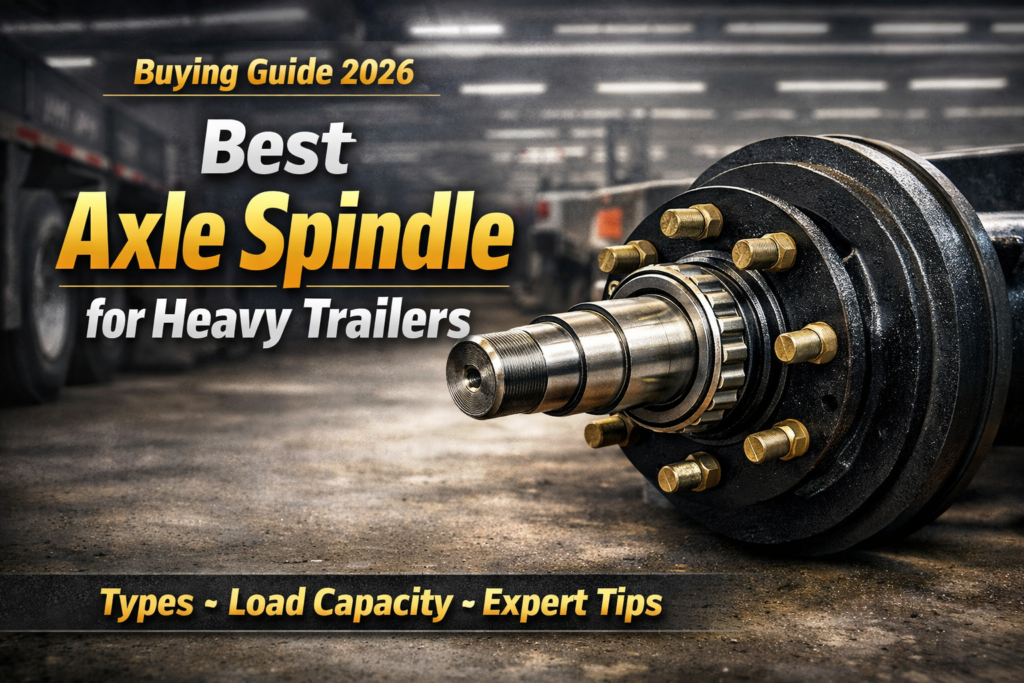
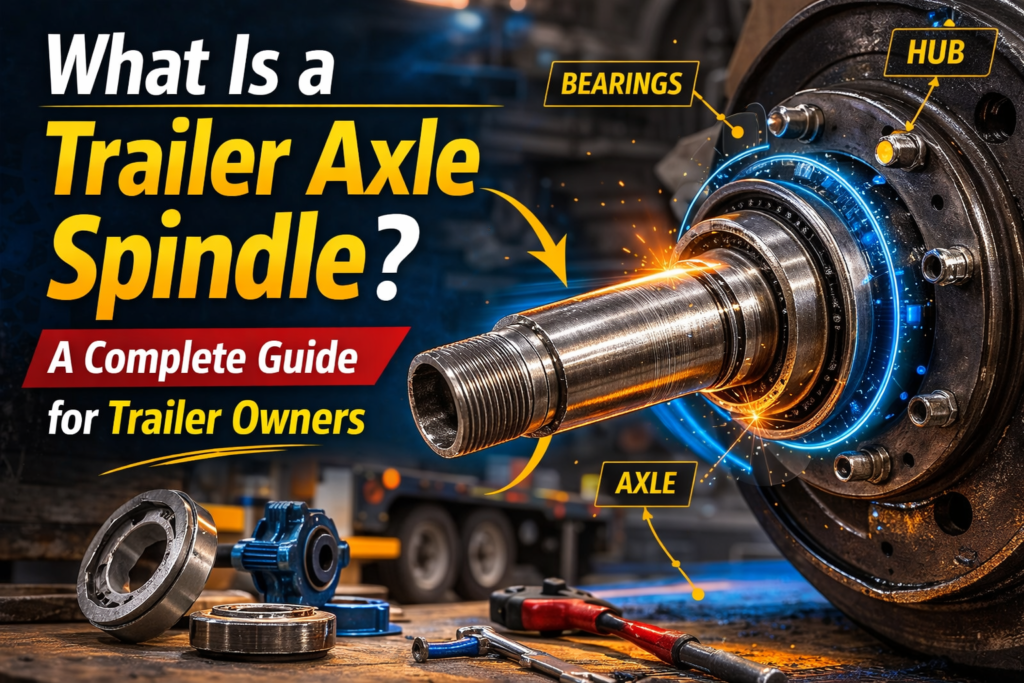
A trailer axle spindle is the shaft located at the end of a trailer axle where the wheel hub and bearings are mounted.
This component allows the wheel to rotate freely while supporting the trailer’s weight and load.
The spindle works together with several other components, including:
Wheel bearings
Hub assembly
Brake components
Axle tube
If the spindle becomes worn or damaged, it can cause serious problems in the wheel assembly.
In many cases, replacing the spindle can restore the axle without replacing the entire axle assembly. This repair method is discussed in detail in our guide on Spindle Replacement vs Full Axle Replacement.
Key Parts of an Axle Spindle
A spindle includes several important sections that allow the wheel assembly to function properly.
Bearing Surfaces
These surfaces support the inner and outer wheel bearings.
Smooth bearing surfaces are essential for proper wheel rotation.
Threaded End
The threaded portion allows the axle nut to secure the hub assembly.
This keeps the wheel firmly attached to the axle.
Seal Surface
The seal surface protects bearings from dirt, water, and contaminants.
A damaged seal surface can lead to bearing failure.
Shoulder
The shoulder supports the inner bearing and ensures correct positioning of components.
Types of Trailer Axle Spindles
Trailer spindles come in different types depending on load capacity and trailer design.
GD (General Duty) Spindles
GD spindles are commonly used for medium-duty trailers and lighter commercial loads.
They are designed for standard hauling applications.
To learn more about this type, see our guide on GD vs HD Axle Spindles Explained.
HD (Heavy Duty) Spindles
HD spindles are built for higher load capacities and heavy-duty commercial trailers.
They are stronger and designed for more demanding applications.
Torsion Axle Spindles
Torsion axles use a slightly different spindle configuration compared to standard leaf-spring axles.
These spindles support torsion suspension systems.
Why Axle Spindles Are So Important
The spindle is responsible for supporting the entire wheel assembly.
If it fails, the wheel assembly can become unstable.
Problems caused by spindle failure include:
Wheel wobble
Bearing overheating
Uneven tire wear
Hub damage
Unsafe trailer operation
These issues can quickly escalate if not addressed early.
Common Causes of Spindle Damage
Although spindles are built from strong materials, they can still become damaged.
Common causes include:
Bearing Failure
When bearings wear out, they can damage the spindle surface.
Overloading
Exceeding the trailer’s rated capacity puts excessive pressure on the spindle.
Impact Damage
Hitting potholes or curbs can bend the spindle.
Lack of Maintenance
Improper lubrication and neglected bearing service can accelerate spindle wear.
You can learn more about warning signs in our guide on Signs Your Trailer Axle Spindle Is Damaged.
Can a Trailer Axle Spindle Be Replaced?
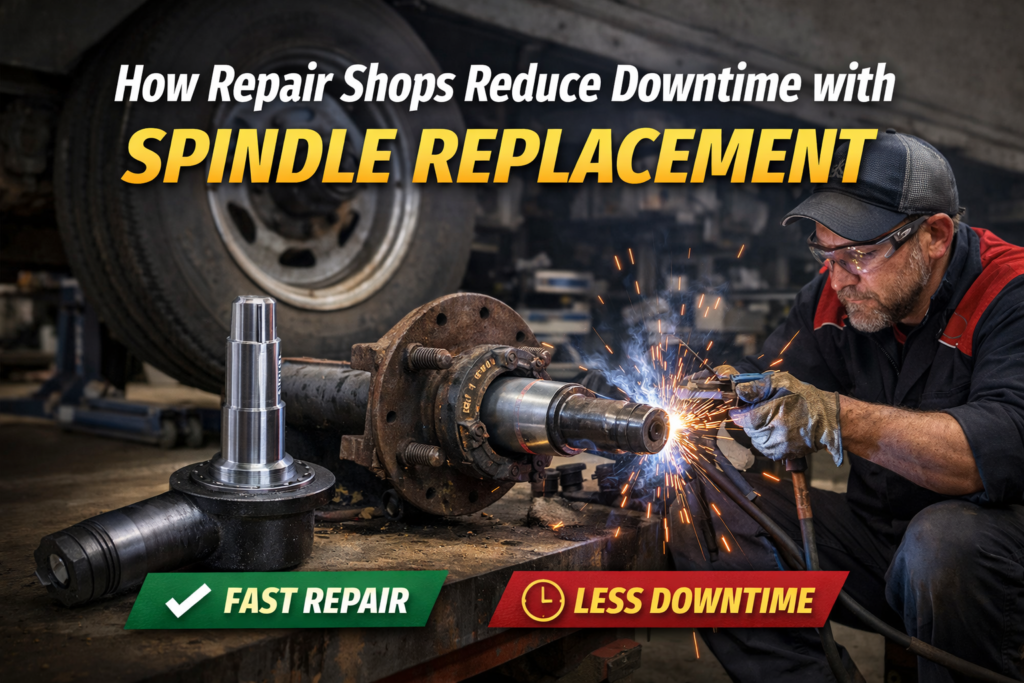
Yes, in many cases the spindle can be replaced without replacing the entire axle.
This repair method involves removing the damaged spindle and installing a replacement spindle.
A common repair solution used by professional repair shops is the 10K GD Axle Spindle, which is designed for many standard trailer applications.
Repair technicians often install weld-on replacement spindles, which are explained in our article Weld-On Axle Spindles Explained.
When Should You Replace a Spindle?
Spindle replacement may be necessary when:
Bearing surfaces are worn
Threads are damaged
The spindle becomes bent
Severe bearing failure occurs
Replacing the spindle early can prevent more expensive axle damage.
Professional repair shops often rely on spindle replacement because it allows trailers to return to service quickly. Learn more about this repair strategy in How Repair Shops Reduce Downtime with Spindle Replacement.
Final Thoughts
The trailer axle spindle is a critical component of the wheel assembly.
Although it is a small part of the axle system, it plays a major role in maintaining safe and stable trailer operation.
Understanding how spindles work, how they become damaged, and how they can be repaired helps trailer owners make smarter maintenance decisions.
In many cases, replacing the spindle instead of the full axle can save time, money, and unnecessary downtime.
Frequently Asked Questions (FAQ)
A trailer axle spindle supports the wheel hub and bearings while allowing the wheel to rotate smoothly. It is located at the end of the axle and carries the trailer’s load while maintaining proper wheel alignment.
Yes, if the axle tube is still straight and undamaged, the spindle can often be replaced using a weld-on replacement spindle. This repair method is commonly used by trailer repair shops to restore axle functionality.
Common causes include bearing failure, excessive loads, poor lubrication, and road impacts. When bearings fail, the resulting heat and friction can damage the spindle surface.
Signs of spindle damage include wheel wobble, uneven tire wear, bearing overheating, or visible spindle bending. If these symptoms appear, the spindle should be inspected immediately.
Yes, when installed correctly by experienced technicians, weld-on axle spindles provide a strong and reliable repair solution for damaged trailer spindles.
Disclaimer
This content is for informational purposes only. Trailer spindle replacement involves welding and safety-critical components. Always consult a qualified professional to confirm fitment and perform installation before operating the trailer.